Call or Text 1.855.993.0499

Call or Text 1.855.993.0499

shipping We Deliver to Ashburn

Change Location

Not the right location? Enter your Zip/Postal Code

shipping We Deliver to Ashburn

Change Location

Not the right location? Enter your Zip/Postal Code

Comparison Guide

Construction Site Theft Is Up: 7 Ways to Strengthen Your Temporary Fence Perimeter

Break-ins rose 50% on TrueLook-monitored sites in 2025. Improve construction site security with stronger gates, tamper-resistant hardware, and a closeout plan.

Table of Contents

Stay Informed on Site Security

Get the latest industry reports, pricing trends, and technical guides delivered bi-weekly.

Secure Gates With Documented Daily Checks

Use Anticlimb Panels To Discourage Climbing

Prevent Panel Separation With Lockable Couplers

Combine Fencing With Cameras And Lighting

A temporary construction fence can look complete and still leave a way in

Walk most perimeters at the end of a shift and the fence looks fine. Panels are standing, the line is continuous, and the site reads as closed. But a temporary construction fence can look complete and still leave an easy route onto the jobsite. The weakness may be an unlocked vehicle gate, a panel joint someone can unclip, or a section that lifts straight out of its base.

The numbers say those weak points are getting tested. TrueLook and Noonlight’s 2026 State of Construction Site Security report recorded 2,639 confirmed break-ins across the U.S. construction sites covered by their monitoring service in 2025, a reported 50% increase over the previous year. One recurring weakness was simple: unlocked or unsecured gates.

The practical response to a construction site security problem is not more panels. It is a perimeter built as a system: Anticlimb panels, tamper-resistant connections, anti-lift hardware, controlled gates, and a closeout process that makes someone responsible for checking them. Then that physical boundary gets connected to lighting, monitoring, and secure equipment storage.

The short answer for a busy project team

  • Secure and document the gates first. An open entrance defeats a strong fence line.
  • Match each control to a weakness: mesh for climbing, couplers for panel separation, brackets for lifting, gates for access.
  • Keep the line continuous as grades, deliveries, and work zones change.
  • Treat the fence as one layer. Pair it with lighting, monitored cameras, a response plan, and locked storage.

What the 2026 construction site security data actually shows

The TrueLook findings are worth reading closely, because how you use them matters. Across the sites their service monitored, more than 40% of break-ins happened on weekends, and the report flags 11 p.m. to 3 a.m. as the highest-risk window. Unlocked or unsecured gates showed up as a common enabler, and the report recommends documented gate checks at the end of every shift.

Two cautions keep this honest. First, this is a security providers monitored-site dataset, not a census of all U.S. construction theft, and TrueLook sells monitoring. Second, “break-ins” include unauthorized presence as well as active burglary, so 2,639 break-ins is different from 2,639 thefts. What the data does support is the pattern: people get in where access is easiest, and the gate is often the easiest place.

Independent insurer guidance points the same direction. Travelers recommends perimeter fencing, locked gates, lighting, electronic surveillance, and secure storage. In Canada, Northbridge Insurance recommends layered measures including controlled equipment access, locks, lighting, immobilization, and tracking. Neither treats the fence as the whole answer.

7 ways to strengthen construction fencing against jobsite theft

Each of these closes a specific way people get onto a site. Specify them together and your construction fencing works as a system instead of a quantity of panels.

1. Secure the gates before upgrading anything else

A stronger fence line cannot make up for an open entrance. Start at the gate. A locked perimeter is only as dependable as the gate the last delivery used.

  • Identify the active entrances for each project phase.
  • Assign who closes and inspects each gate.
  • Define key control and who can authorize after-hours access.
  • Record the closeout check instead of assuming the last person out handled it.

Broadfence’s Anticlimb Classic & Platinum Pedestrian Gate gives you a defined, lockable entrance for foot traffic. For trucks and equipment, sliding gate kits and panel wheel kits create vehicle openings in the same panel line. Plan the locks and latches for those openings as part of the spec. The Broadfence guide to choosing a temporary gate covers sizing and placement.

2. Use Anticlimb fencing to make climbing harder

Broadfence describes the welded mesh on its Anticlimb Premium panel as designed to limit handholds and footholds and discourage climbing. Classic and Platinum Anticlimb panels are also available. Anticlimb fencing makes climbing more difficult and helps discourage unauthorized access. It does not make a temporary fence impossible to climb, and no honest supplier should tell you it does.

Use it where your risk assessment calls for stronger access control: public-facing edges, laydown areas with copper or tools, and sites with a history of after-hours visits.
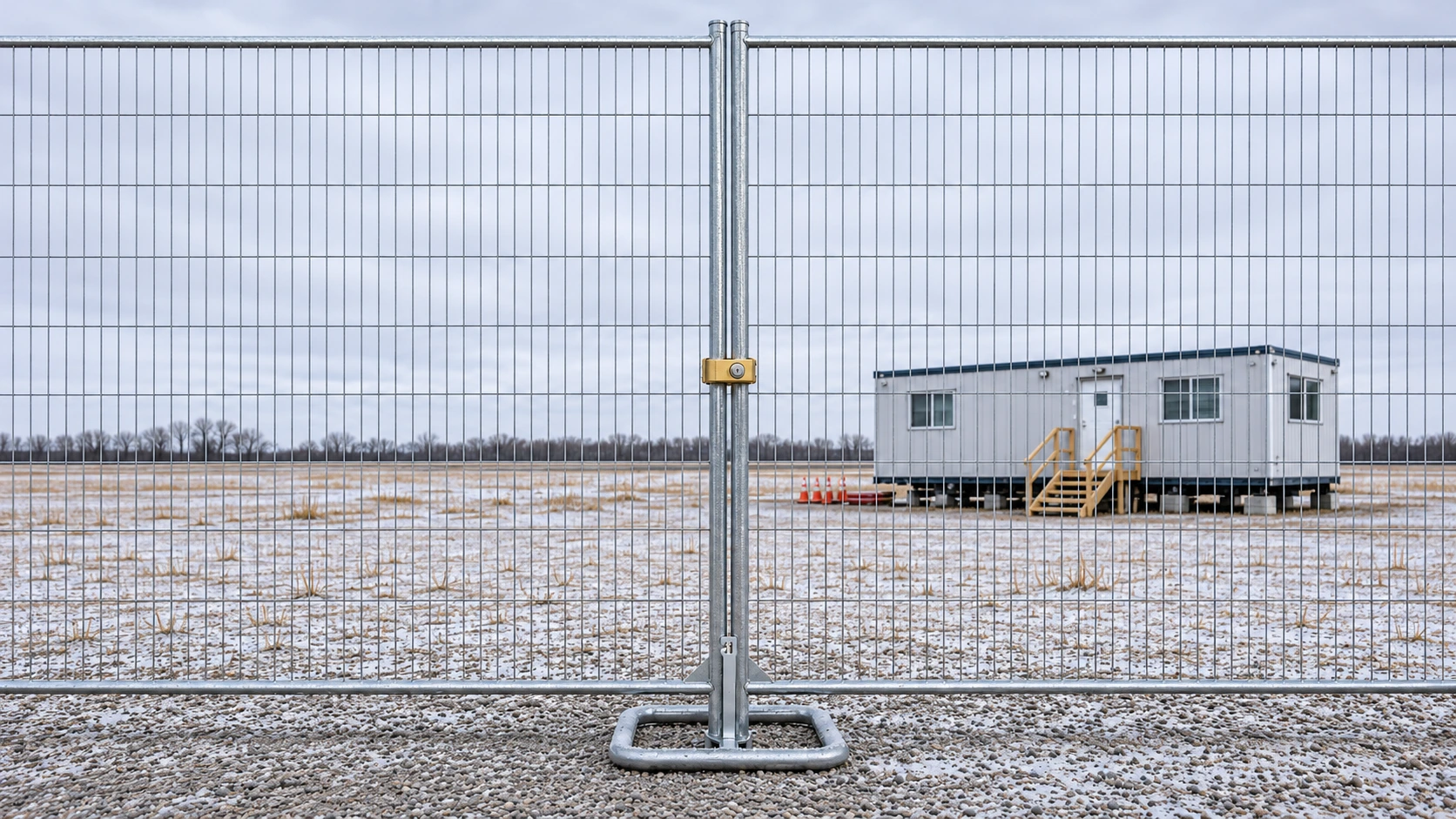
Temporary construction fence with lockable couplers and anti-lift brackets on a late-autumn Canadian jobsite


3. Make panel connections harder to tamper with

Specify the connection as carefully as the panel. A perimeter loses continuity when sections can be unclipped and moved aside. Broadfence’s Anticlimb Lockable Coupler is an anti-tamper upgrade intended to help prevent fence sections from being unclipped and removed, and a dedicated Lockable Coupler Socket is also listed.

Confirm compatibility before you order. Broadfence states that its Premium Panel Coupler is not interchangeable with Classic or Platinum hardware, so match couplers to the panel family on your site.

4. Stop panels from being lifted out of their bases

Lockable couplers help resist separation between panels. Anti-lift brackets address a different weakness: lifting a panel straight out of its base. Strengthening one connection does not automatically secure the other. The Broadfence guide to stopping construction fence panel theft with anti-lift brackets shows how the bracket connects the foot and panel through the coupler.

Bracket spacing and quantity should come from an approved configuration for your system and site conditions, not a rule of thumb.
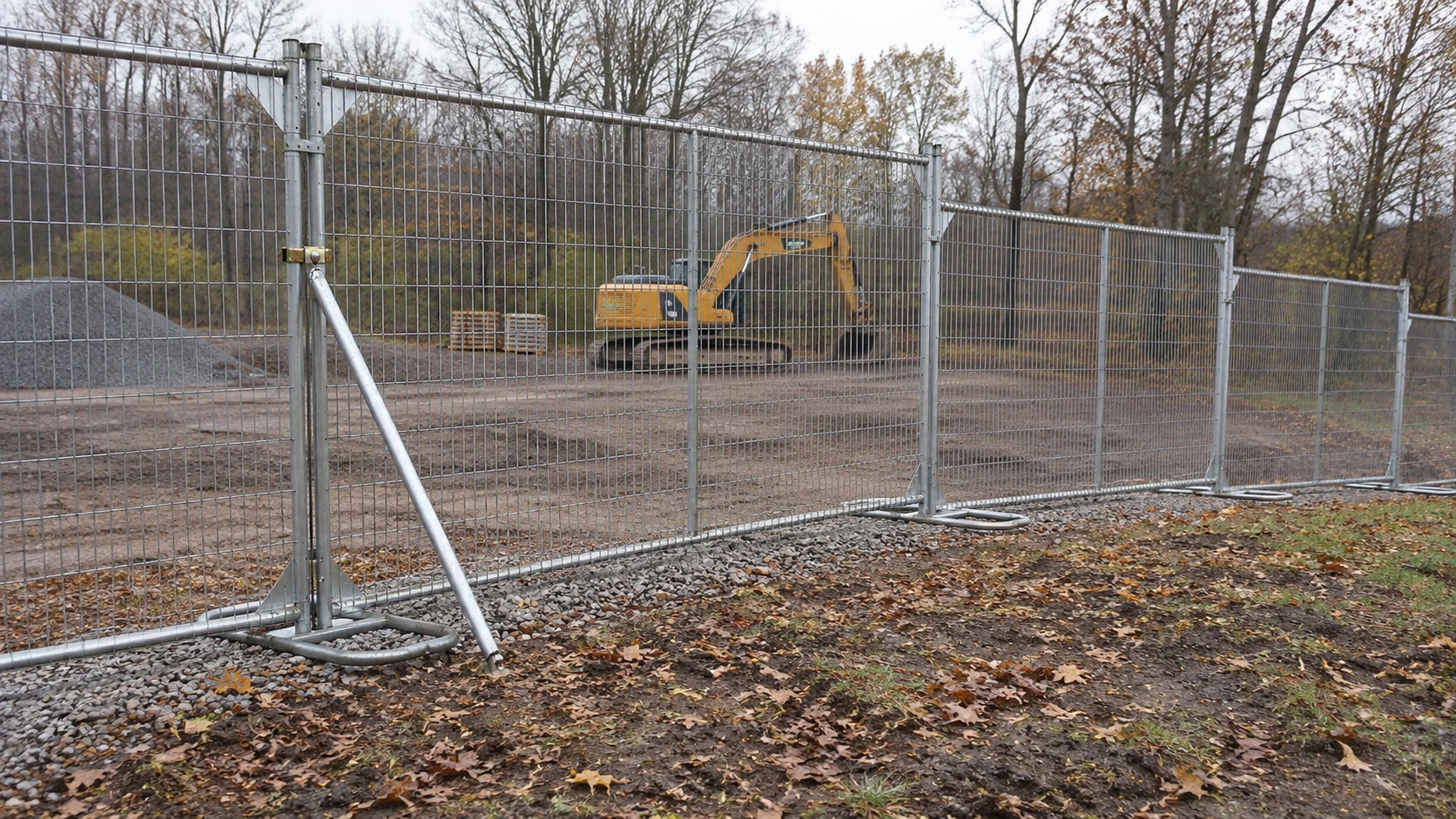
Construction site fencing with bases adjusted at a grade change to close a gap under the panels

5. Keep construction site fencing continuous as the site changes

Gaps rarely appear on install day. They appear in week six, after an excavator clipped a base, a grade changed, or a crew pulled a panel for a delivery and never set it back. Broadfence’s guidance on closing temporary fence panel gaps points to panel alignment, base adjustment, tightened or replaced couplers, and regular hinge and latch checks.

Choose bases and stabilizers for the surface, whether that is penetrable ground or pavement where you cannot drive anything. An anti-lift bracket is not a substitute for proper bases or stabilization.
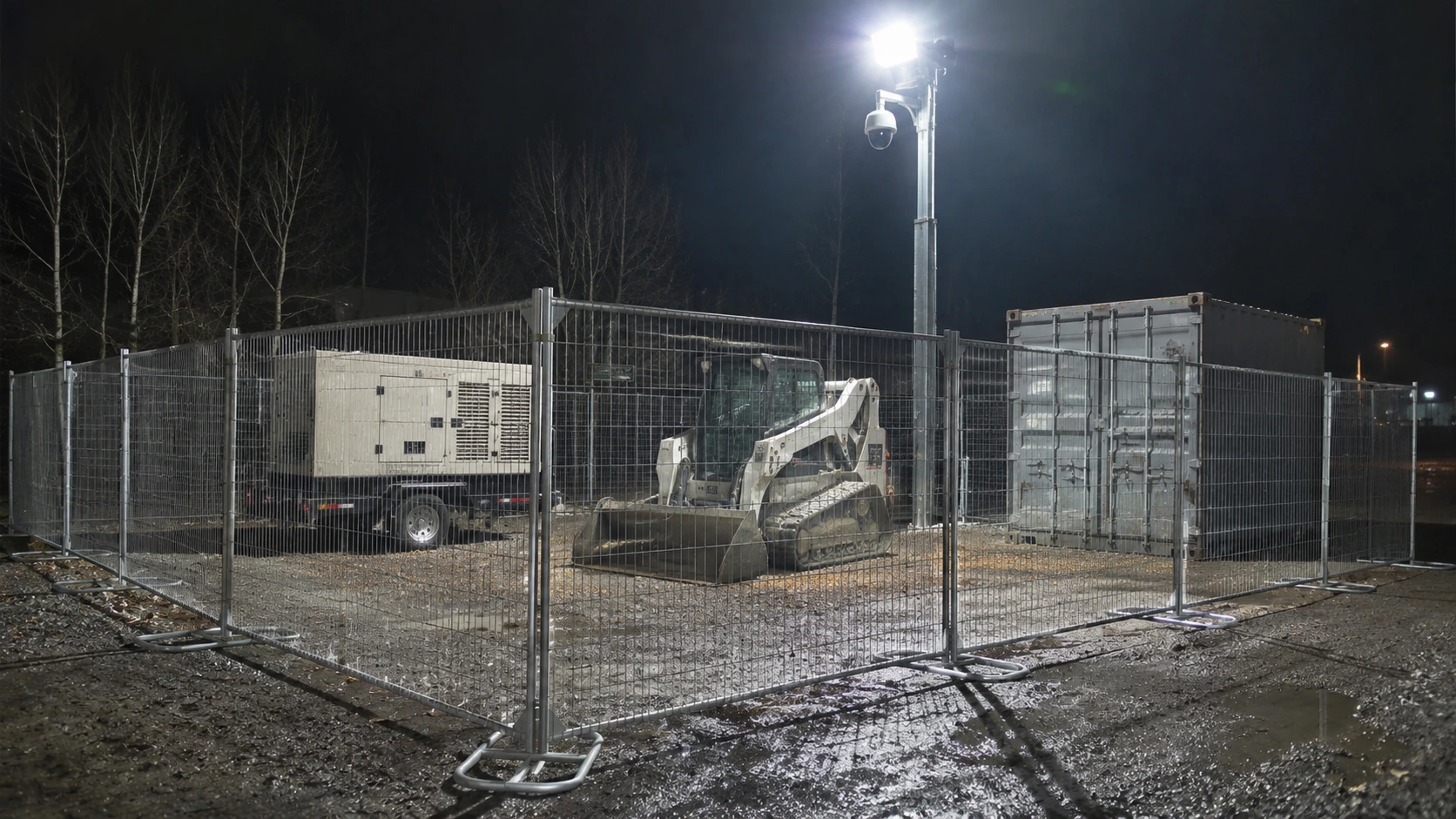
Job site surveillance cameras and lighting covering a fenced equipment compound after dark

6. Pair the perimeter with lighting, job site surveillance cameras, and a response plan

Recording an incident and responding to one are different capabilities. Travelers recommends physical barriers alongside lighting and continuously monitored detection, and advises covering office trailers, storage areas, and containers, not just the building under construction. TrueLook describes footage review, audio or visual deterrents, contact notification, and escalation to police when appropriate.

  • Aim job site surveillance cameras at entrances and high-value storage first.
  • Recheck coverage whenever fence lines or staging areas move.
  • Name who receives after-hours alerts.
  • Tell your monitoring provider when authorized crews will be on site after hours.
  • Write down who escalates, and when.
7. Protect equipment and materials inside the fence

Do not give the perimeter the entire security job. Lock the storage, control the keys, and make valuable equipment harder to remove even if someone gets inside. Travelers recommends secure storage and, where practical, just-in-time material delivery. Northbridge recommends removing equipment keys, locking doors and engine compartments, controlled-access equipment storage, and tracking or immobilization suited to the asset.

An internal fenced compound for equipment or materials is a layout option worth discussing with your supplier. It adds a second line. It does not replace locked containers, equipment controls, or cameras.

Your end-of-shift construction site fencing checklist

Use this as an editorial checklist for the closeout walk. It is not a code-mandated specification, so adapt it to your site and your supplier’s approved configuration.

Check

What to look for

Weakness it closes

Gates

Locked, latched, leaves aligned, closeout signed

Open or unsecured access

Panel joints and corners

Couplers present, tight, and locked where specified

Panels unclipped and moved aside

Bases

Seated, not displaced by equipment or deliveries

Unstable line and lift points

Anti-lift hardware

Brackets in place per the approved layout

Panels lifted out of bases

Grade changes

No bottom gaps where the ground drops

Crawl-under entry

Temporary openings

Any panel pulled during the day is restored

Forgotten gaps

Lighting and cameras

Working, aimed at entrances and storage

Undetected entry


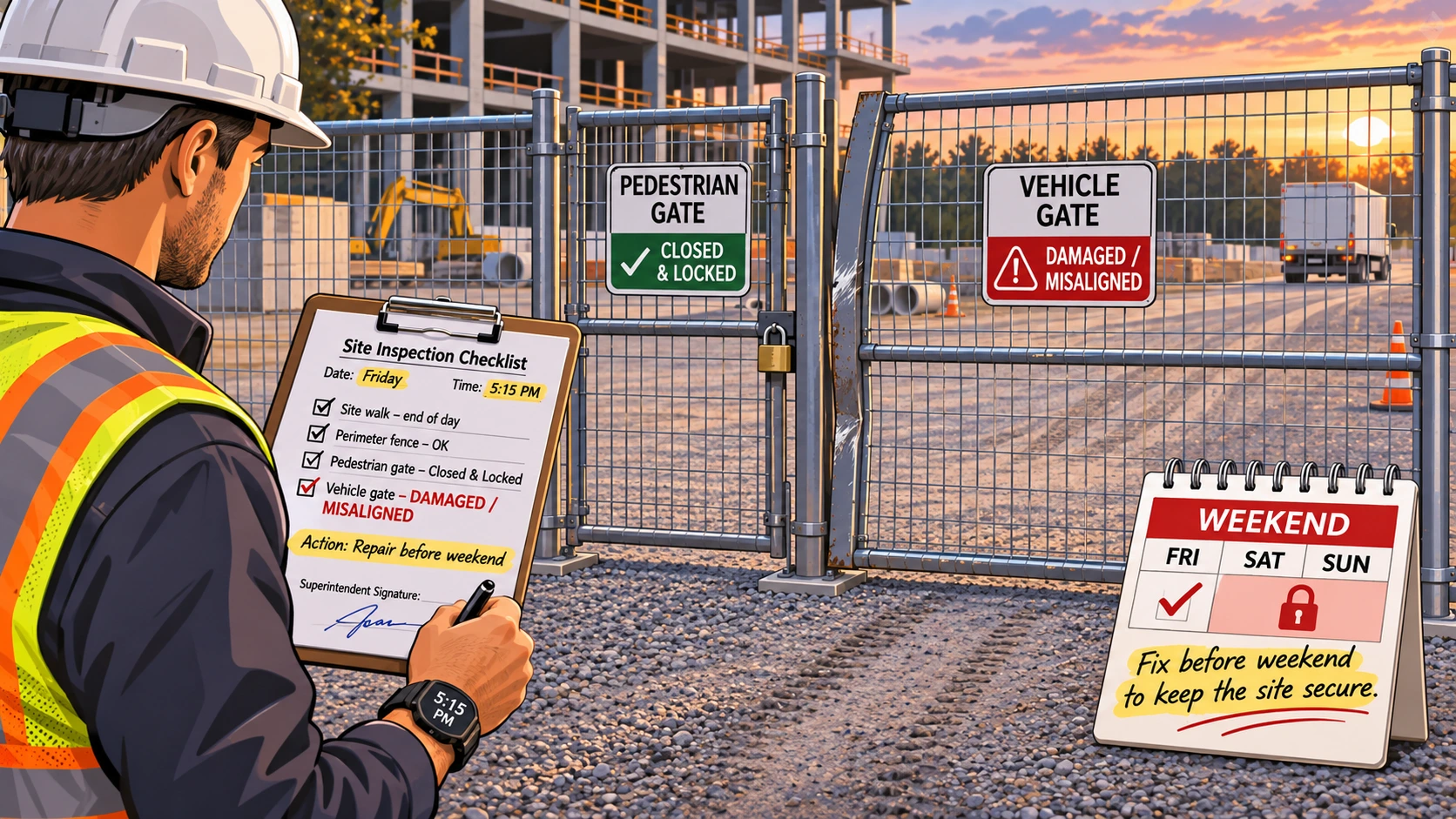
Illustration of a site superintendent completing a Friday evening inspection with the pedestrian gate locked and a damaged, misaligned vehicle gate flagged for repair before the weekend

Illustrative scenario. A super finishes the walk at 5:15 p.m. on a Friday. The pedestrian gate is locked, but the vehicle gate leaf no longer meets its post after a delivery truck clipped it at noon. Because the check is written down and signed, the problem gets fixed before the weekend, which is when more than 40% of break-ins happened on TrueLook-monitored sites.
What an anti-intruder fence can and cannot do

Be clear-eyed about this. A well-specified anti-intruder fence deters, delays, and defines. It makes climbing harder, makes panels harder to separate or lift, and channels people through gates you control. That is real value for construction site security.

It does not guarantee theft prevention. No evidence we reviewed supports a universal theft-reduction percentage for any fence, and the TrueLook data shows people get in through gates as often as anything else. The evidence supports layered risk reduction: the fence, the gates, the closeout, the lighting and cameras, and locked storage, working together.

Where Broadfence fits

Broadfence is the physical access-control layer. Our Anticlimb fence panels, lockable couplers, anti-lift brackets, pedestrian gates, and sliding gate kits each match one of the weaknesses above. Specify them together, for the panel family and surface on your site, and the fence works as a connected system.

If you are building next year’s security budget at the same time, our guide on daily fence cost versus incident cost shows how to put the perimeter and your incident history on the same page.

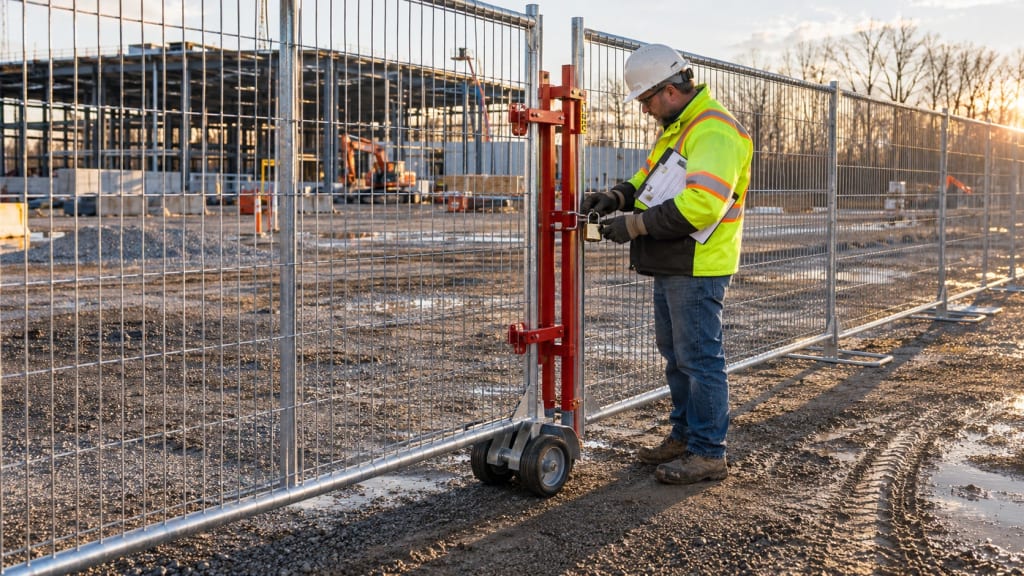
Site supervisor locking a construction fencing gate during an end-of-shift perimeter closeout

Check the gate before you check out.

Construction site security comes down to closing the easy ways in. Lock and document the gates. Use Anticlimb mesh where the risk calls for it. Lock the joints, stop the lifts, keep the line continuous, and back it with lighting, cameras, and locked storage.

Planning a new perimeter or upgrading an existing fence line? Request a quote for Anticlimb panels, lockable couplers, anti-lift brackets, and pedestrian or vehicle gate options. Start with your site layout and access requirements, so the panels, hardware, and openings are specified together.

Safe. Simple. Secure.

Recommended Products

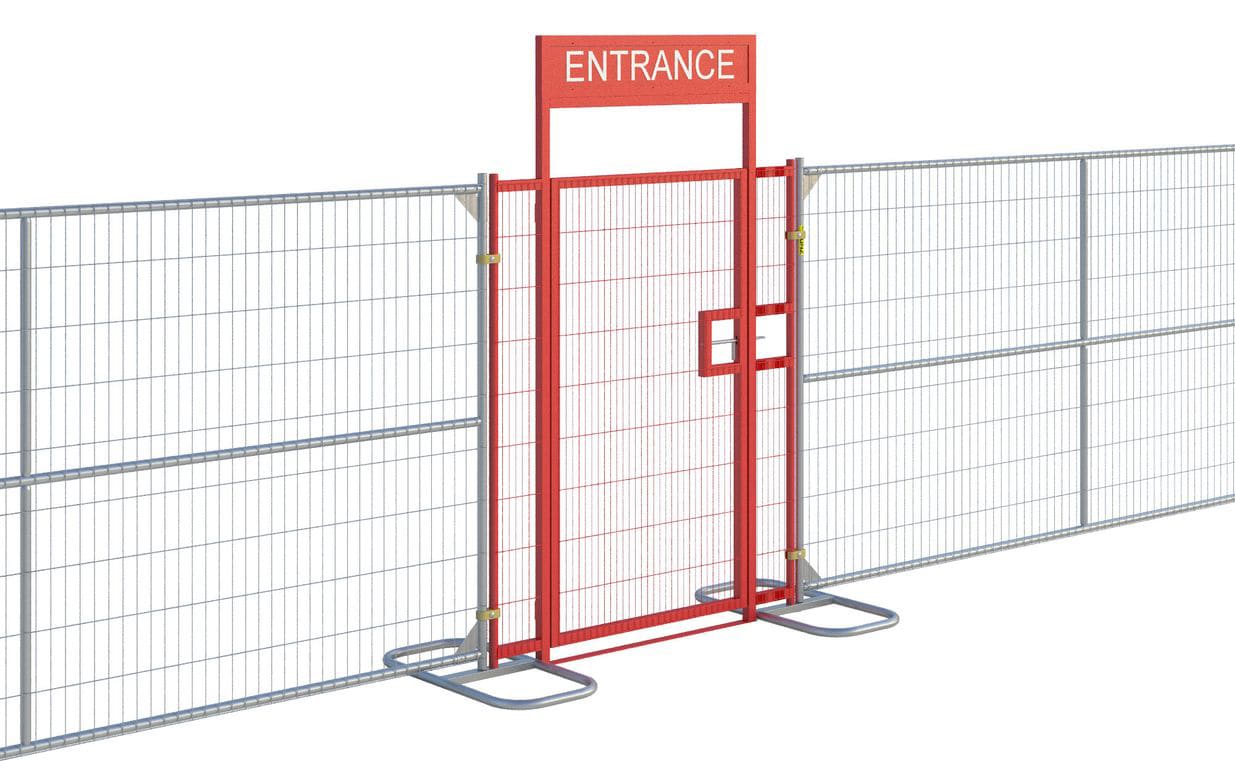
Anti-Climb Classic & Platinum Pedestrian Gate

The Anti-Climb Classic & Platinum Pedestrian Gate provides a defined, lockable foot-traffic access point within an anti-climb fence line, supporting controlled entry onto active construction sites. Available for purchase, ideal for construction, demolition, and event sites requiring controlled pedestrian access.
Anticlimb latinum Pedestrian Gate

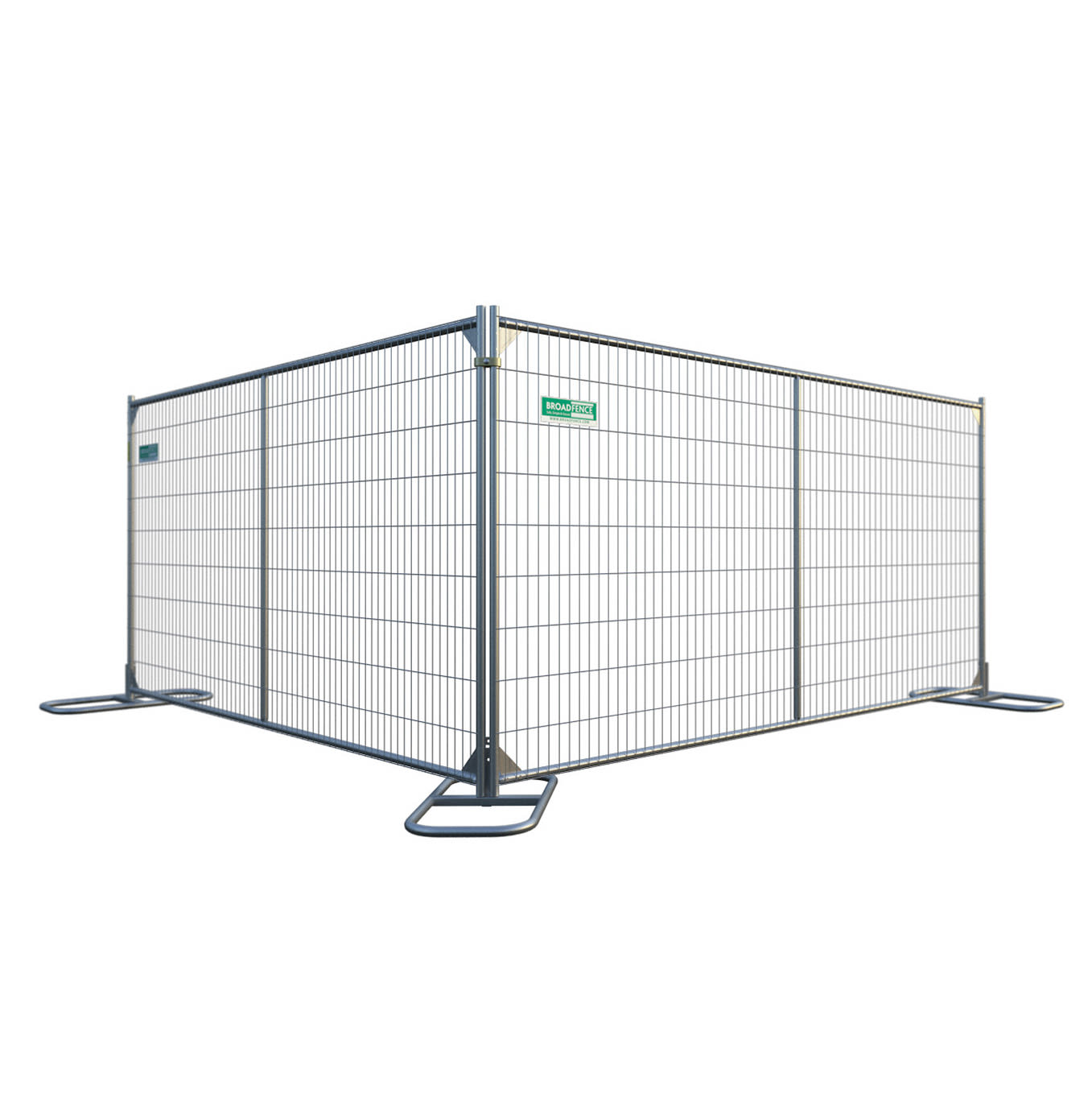
Anti-Climb Platinum Fence Panel 6ft

Anti-Climb Platinum Fence Panel is a 6ft heavy-duty galvanized temporary fence panel with anti-climb mesh, designed to deliver reliable perimeter security and long-term durability on demanding construction and industrial sites, data centers, high-theft-risk construction sites, and elite-security event perimeters. Available for purchase.
Anticlimb Platinum Fence Panel

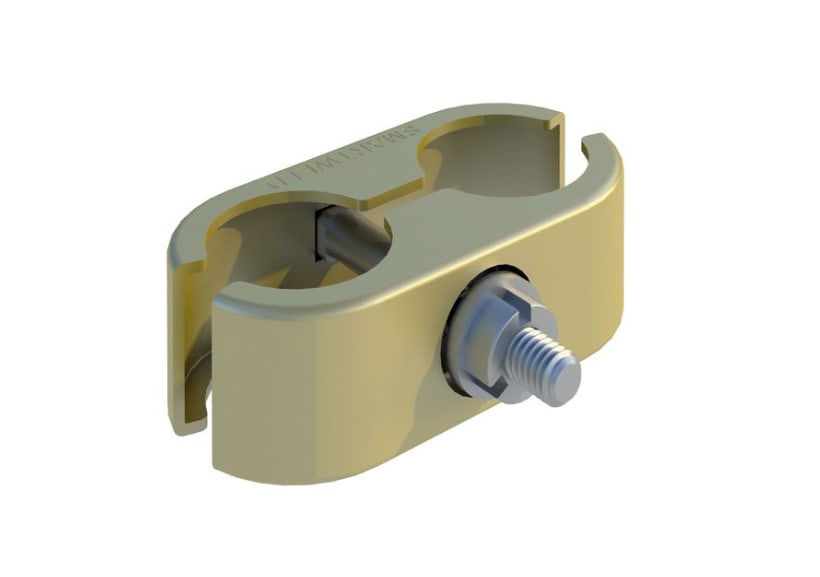
Anti-Climb Lockable Coupler

The Anti-Climb Lockable Coupler is the trusted anti-tamper upgrade with griplock protection against theft. Available for purchase, helping prevent sections of a fence line from being unclipped and removed.
Anticlimb Lockable Coupler

FAQ

Partly. A temporary construction fence with Anticlimb mesh, lockable couplers, and anti-lift brackets deters and delays unauthorized entry, but it does not guarantee theft prevention. It works best as one layer alongside locked gates, lighting, monitoring, and secure storage.

Start with documented gate checks at the end of every shift since unsecured gates were a common enabler on TrueLook-monitored sites. Then cover entrances and storage with lighting and monitored cameras, and name who responds to after-hours alerts.

No. Anticlimb fencing makes climbing harder, but people also get in through open gates, unclipped panel joints, and lifted panels. Pair it with lockable couplers, anti-lift brackets, and controlled gates.

Lockable couplers help prevent panels from being unclipped and separated, while anti-lift brackets help prevent panels from being lifted out of their bases. They address different weaknesses, so most secure perimeters need both, matched to the panel family.

Check gates, panel joints and corners, bases, anti-lift hardware, gaps at grade changes, and any panels moved during the day. Confirm lighting and cameras are working, then sign the closeout so the check is recorded.

No. Job site surveillance cameras detect and record, and monitored systems can trigger a response, but they do not physically stop entry. Insurers such as Travelers recommend using fencing, locked gates, lighting, and surveillance together.

Sources

[1] TrueLook & Noonlight. (2026, September 16). TrueLook and Noonlight release 2026 State of Construction Site Security report. https://www.truelook.com/blog/truelook-and-noonlight-release-2026-state-of-construction-site-security-report

[2] TrueLook. (2026). State of construction site security report. https://www.truelook.com/guide/state-of-construction-site-security-report

[3] Travelers. (n.d.). Protecting your construction site from fire, water and theft. https://www.travelers.com/resources/business-industries/construction/protecting-your-construction-site-from-fire-water-and-theft

[4] Northbridge Insurance. (n.d.). Tips to prevent construction equipment theft. https://www.northbridgeinsurance.ca/blog/construction-equipment-theft/

[5] Broadfence. Anticlimb Platinum fence panel. https://broadfence.com/product/anti-climb-platinum-fence-panel/

[6] Broadfence Accessories. https://broadfence.com/product-category/accessories/

[7] Broadfence: Stop construction fence panel theft with anti-lift brackets. https://broadfence.com/blog/construction-fence-panel-theft/

[8] Broadfence. Eliminate temporary fence panel gaps on construction sites. https://broadfence.com/installation/fence-panel-gaps/

Get a Quote for Your Temporary Fencing Project

Fast, reliable, and tailored to your construction or industrial needs

Trusted by contractors across North America

Shopping in California?

Visit our California site for local pricing and faster delivery.