

Delivery, Installation, and Removal Fees
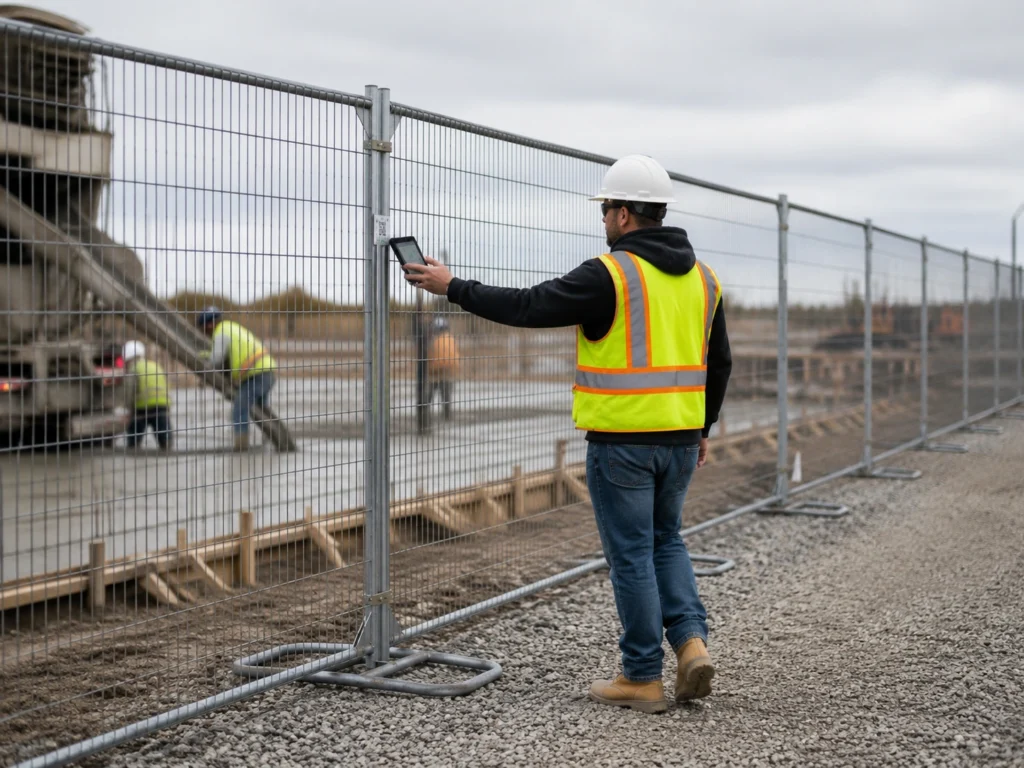
This is the most common surprise on a first invoice. Most rental companies charge separately for delivery to the site, professional installation, and pickup at demobilization. These are not optional add-ons. They are mandatory line items that are sometimes bundled quietly into a first-month rate, making the true split invisible until the second bill arrives.
Delivery and removal fees typically add USD Ten0 to USD 500 or more per project, depending on location and site complexity. Professional installation runs USD 1.00 to USD 2.00 per linear foot. Removal typically accounts for 30 to 50 percent of the installation cost. For smaller projects, these fixed charges can effectively double the per-foot monthly cost.
Ownership advantage: Contractors who own their panels deploy on their own schedule using their own labor. There is no third-party mobilization charge, no minimum delivery window, and no removal fee at demobilization.
- Damage and Repair Charges
Temporary fencing on active construction sites takes a beating. Heavy equipment swings wide. Delivery trucks clip corners. Windstorms hit overnight. Under most rental agreements, the renter bears liability for any panel damage that occurs during the rental period, and you will not know the charge until the inspector comes out at demobilization.
Damaged panel charges range from USD 45 to USD 150 per panel under most rental agreements in North America. On a 50-panel site with regular heavy activity, budgeting for two to three panel incidents per month adds USD 90 to USD 450 in costs not included in the original quote. The problem is that damage is inconsistent and impossible to forecast accurately at the budgeting stage.
Iron mesh welded wire panels have a structural advantage here. Because every wire is independently welded to the frame, localized impacts are far less likely to cascade into full-panel structural failure compared to chain link, where the interwoven diamond pattern is more vulnerable to impact-related deformation.
- Mandatory Accessory Costs
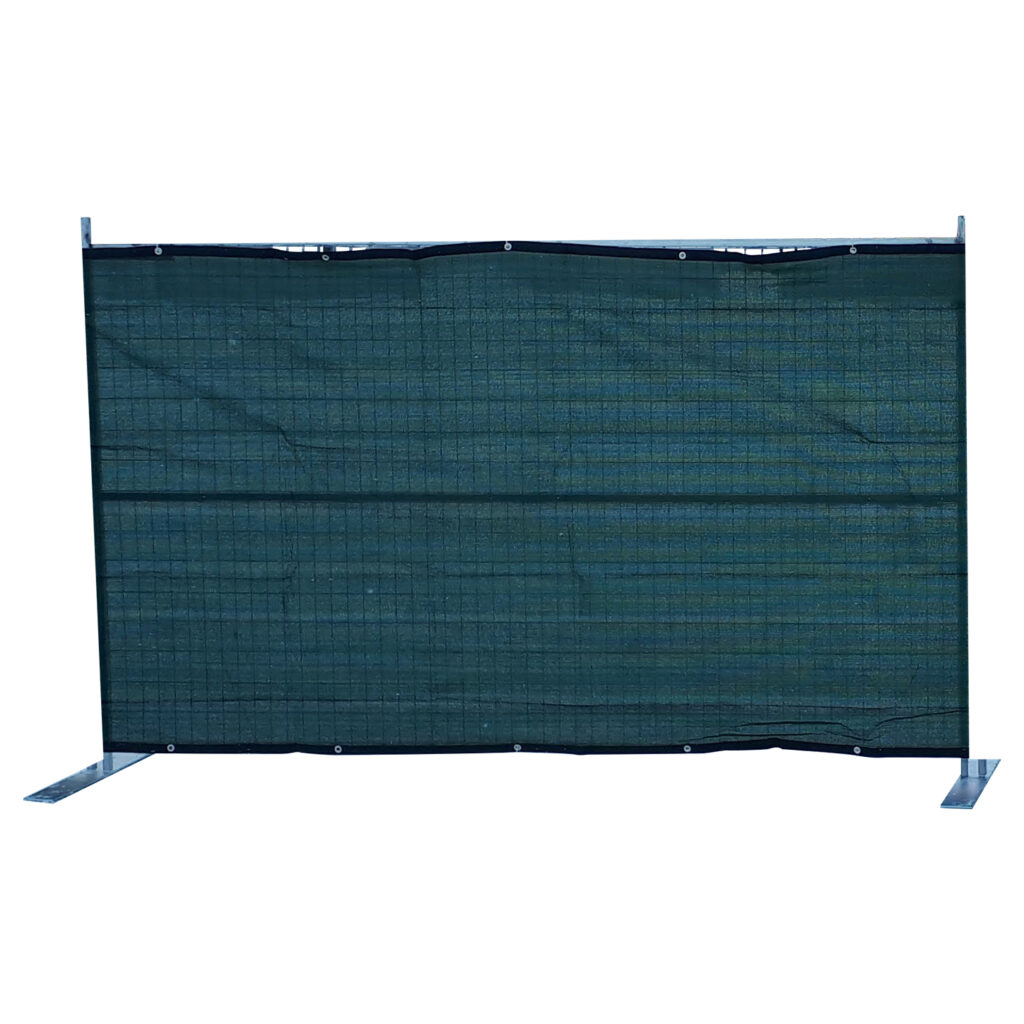
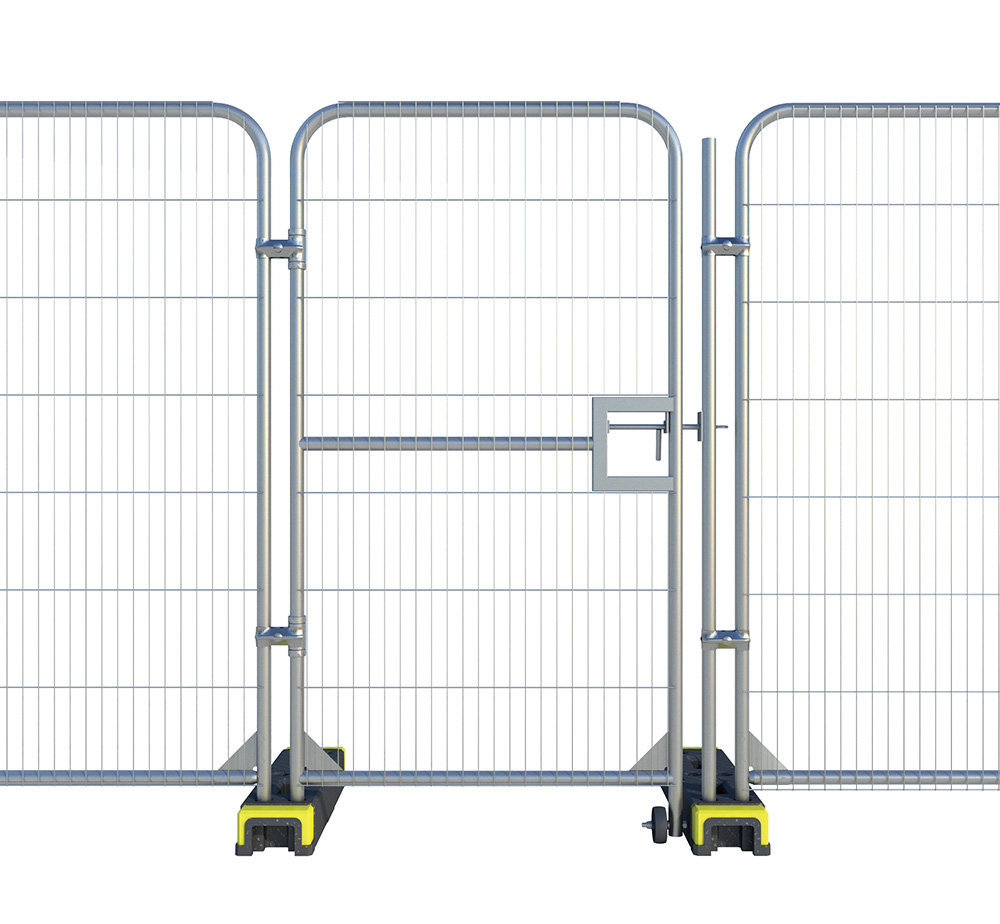
The panel rate is what gets quoted. The system is what you actually need. A functional temporary fence on a real construction site requires bases, connecting clamps, gates, and, in many cases, privacy or wind screens . Each of those is a separate rental line item, and they are rarely included in the number you saw in the first quote.
- Vehicle access gates: Higher cost, billed separately from pedestrian gates
- Ballast and bracing: Required on soil, gravel, or frost-heaved ground, especially across Canadian sites in spring and fall.
Add those up on a realistic Ten-panel system, and your all-in cost can run from USD 640 to USD 990, compared to a headline panel-only quote of USD 240. That gap is simply what a compliant, functional fence system actually costs to deploy on a working site.
- Project Overruns and Rental Extension Charges
This is the hidden cost that hits the most budgets the hardest because it is the most predictable risk in construction and the one that gets planned for the least.
A Procore-commissioned study found that 77 percent of North American construction projects finish late, with the average project running 70 days over the original schedule. In Canada specifically, Construction Canada reported that the average extension of time claimed was 53.4 percent of the planned project duration. For Canadian projects, 75 percent report a budget overrun.
What that means for your fence budget is straightforward. For a 500-foot site renting at USD 2.00 per linear foot per month, a 70-day overrun adds approximately USD 2,300 in unbudgeted rental costs. Rental companies do not offer discounts for involuntary extensions. If the overrun occurs during peak season, that figure climbs by another Ten to 20 percent due to seasonal surcharges.
Practical guidance: Add a 15-20 percent timeline buffer to your estimated rental duration during budgeting to account for the industry-wide overrun pattern before you sign the rental agreement.
- After-Hours, Weekend, and Emergency Service Surcharges
Construction mobilization does not wait for business hours. Neither do project changes. When your fence needs to go up on a Saturday for a Monday crew start or needs to be relocated mid-project as your site footprint shifts with phased work, you are looking at premium service rates that are rarely clearly specified in the original rental quote.
Weekend, evening, and holiday service charges are documented across the North American rental market as a standard but under-disclosed addition to rental bills. Emergency relocation requests, moving fence lines as construction phases advance, and out-of-hours inspections all generate variable per-call charges. Scheduling installations on Fridays and removals on Mondays, where possible, is a commonly cited strategy to minimize these charges. Still, on a busy multi-phase project, you will rarely have that flexibility at every stage.
- Permit Fees and Regulatory Compliance Costs
Temporary fencing on construction sites in North America is not permitted in most jurisdictions. In Canada, the Canadian Standards Association’s CSA S806 sets a minimum height of 1.8 meters and structural resilience requirements as a national baseline. Provincial OHS acts in Ontario, Alberta, and British Columbia layer additional requirements on top of that, including the requirement to use locked gates when sites are unattended.
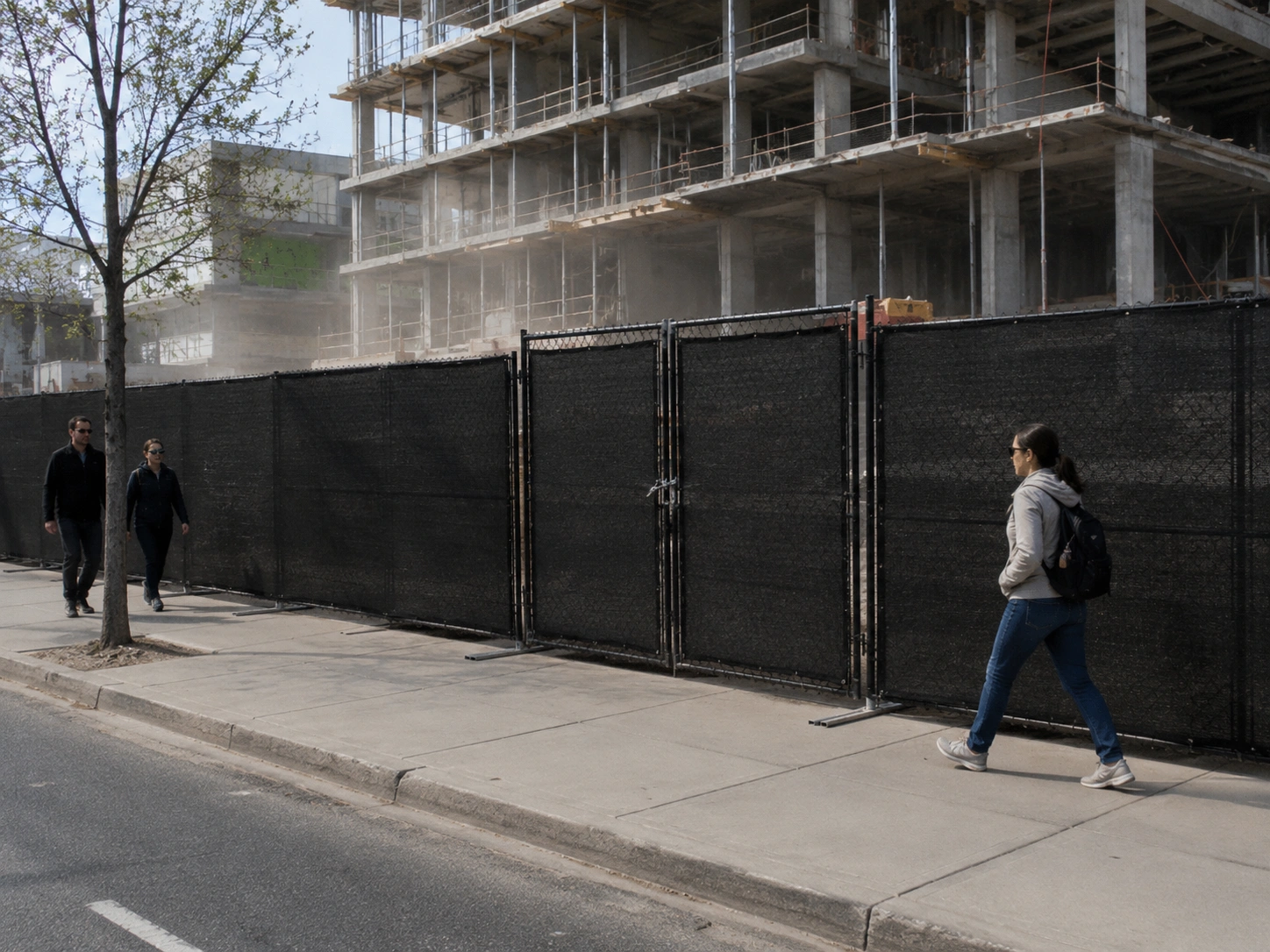
In major urban centers like Toronto, Vancouver, and Calgary, fencing that encroaches on public property requires a street occupancy or hoarding permit. In New York City, construction fences for new construction and demolition work must be at least 8 feet high and constructed of solid material, with specific requirements for viewing panels, signage, and gate operation. OSHA fall protection violations have been the most-cited construction violation for 15 consecutive years, with penalties in 2025 reaching USD 16,550 per serious violation and up to USD 165,514 for willful or repeated violations.
These compliance costs fall entirely on the contractor, regardless of whether the fence is rented or owned. But contractors who own iron mesh welded wire panels typically meet or exceed CSA and provincial height and strength requirements by default, reducing the risk of a compliance-driven mid-project upgrade that adds unplanned cost and delay.

- Storage, Logistics, and Transportation Costs on the Purchase Path
If you are evaluating the ownership path, these are the costs most analyses omit. Owned fence panels are not free to store, move, or insure. Each of these represents a real overhead that belongs in your total cost-of-ownership calculation before you compare ownership to renting.
- Storage: Panels need yard or warehouse space, even at a conservative square-footage cost, which is an ongoing indirect overhead between projects.
- Transportation: Moving panels from storage to site A, then site A to site B, then back to storage requires trucks, fuel, driver time, and load and unload labor. In remote or northern Canadian locations, this can be a high per-deployment cost that approaches or exceeds the equivalent per-use rental delivery charges.
- Insurance: Owned panels are a company asset and require coverage against theft, weather damage, and fire.
Industry guidance recommends adding approximately USD Ten0 per month as an overhead buffer for storage and transportation when calculating total ownership costs. That number scales with your fleet size and the geographic spread of your project portfolio, but it belongs in the analysis before you make the call.
- Depreciation and Long-Term Asset Management
Purchased fence panels are capital assets. They depreciate, they sit on your balance sheet, and they have a resale or disposal value that affects your total cost of ownership calculation. Most purchase-path analyses omit this entirely, so the true net cost of ownership is often lower than people assume.
High-quality, pre-galvanized iron mesh panels can retain 30 to 40 percent of their original purchase price after three to five years of active use, provided they are properly maintained. That projected resale value directly reduces the net cost of ownership and should be incorporated into any purchase-path analysis from day one.
The caveat is condition management. Panels stored outdoors in Canadian winters without proper weatherproofing can rapidly lose value due to corrosion and frame deformation. Pre-galvanized iron mesh panels offer contractors a proven combination of corrosion resistance, structural durability, and a cost-effective entry point, making ownership practical from the first project. For contractors managing ongoing construction portfolios across North American job sites, pre-galvanized panels deliver the long-term asset value and climate performance you need without the premium upfront cost of hot-dip alternatives, making them the smarter starting point for building a reusable fence fleet.
- Security Gaps and Site Theft Liability
This is the hidden cost that rarely appears on a fencing invoice but shows up on police reports and insurance claims. The type of fence you choose, and its condition, directly affect how much of that risk you are carrying.
Construction site theft costs the U.S. industry an estimated USD 300 million to USD 1 billion annually. In Canada, Aviva Canada estimates annual equipment theft at CAD 46 million, with projections suggesting combined on-site theft may approach CAD 300 million annually. An independent survey of Ten0 Canadian construction companies found an average of 2 theft incidents per company per year, with average losses of CAD 25,900 per licensed vehicle incident. Less than 25 percent of stolen construction equipment is ever recovered.
Seventy percent of U.S. construction site thefts occur at sites with inadequate or no security. And the type of fence matters significantly. Chain-link panels with their diamond pattern provide natural footholds that an experienced climber can use to scale quickly. Iron mesh welded wire panels, with small aperture sizes of typically 2×4 or 2×6 inches, eliminate those footholds by design. For sites containing high-value equipment, raw materials, or copper wiring, the premium cost of an anti-climb specification is typically justified by reduced theft exposure alone.
- Steel Tariffs and Material Price Volatility
Both rental pricing and purchase costs in 2025 and 2026 are being directly affected by the North American steel tariff policy. As of 2026, the U.S. maintains a 50 percent Section 232 tariff on steel and aluminum imports, including derivative products. Canada applied a 25 percent tariff on U.S. steel and aluminum effective September 1, 2025.
These tariffs do not stay with the manufacturer. They move downstream. Rental companies and panel distributors pass material cost increases through to their pricing, which means contractors who rent are absorbing tariff volatility on every billing cycle. The National Association of Home Builders reported that more than 60 percent of builders surveyed in April 2025 had seen higher costs due to tariffs, with a typical all-in cost effect of USD Ten,900 per home, with steel-intensive products like fencing panels among the most directly affected categories.
The procurement implication is straightforward. Locking in purchase pricing when steel costs are stable insulates you from future tariff-driven increases in rental rates. For contractors who rent, rental agreements with clear rate-lock provisions offer partial protection, but those provisions are not always available and are rarely offered proactively by rental companies.